Working with AI
One Memory Across Multiple Projects Without Mixing Everything
Short answer
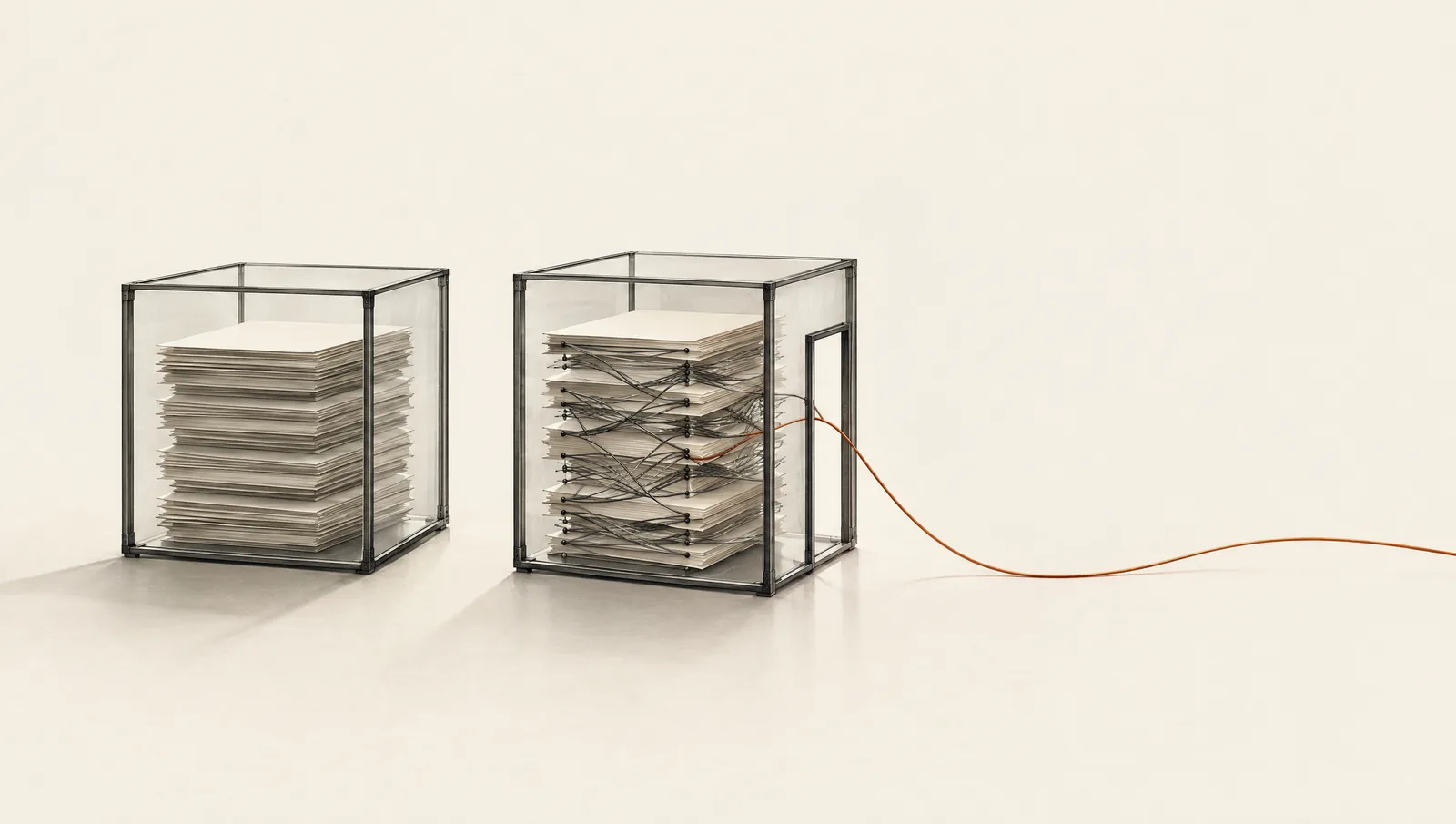
A founder may work on several companies, clients and ideas in one day. One global memory seems convenient until private information enters the wrong context, similar decisions are confused or an assistant applies one project's rule to another. Multi-project memory needs explicit boundaries. ## Four levels to distinguish
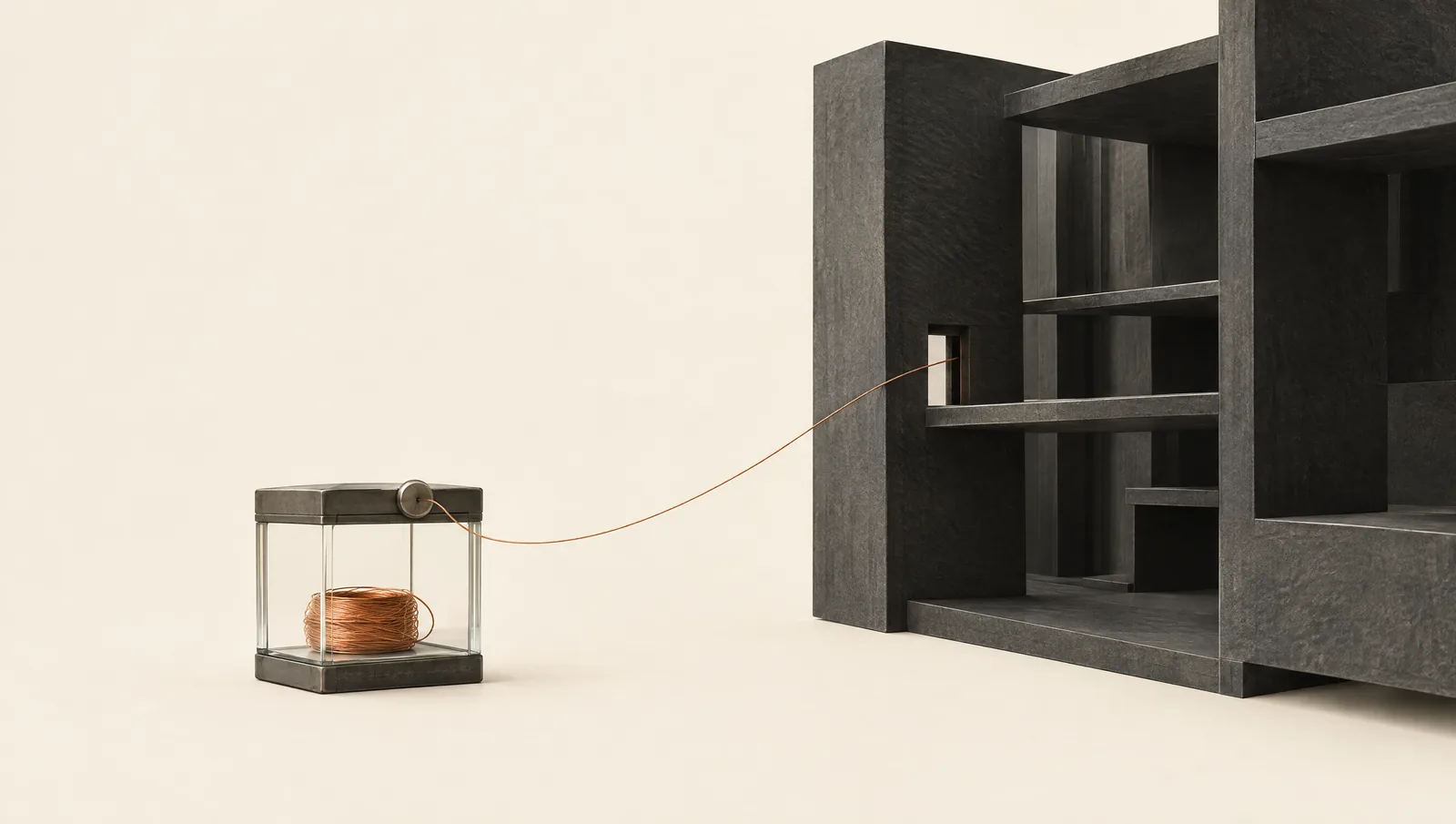
A founder may work on several companies, clients and ideas in one day. One global memory seems convenient until private information enters the wrong context, similar decisions are confused or an assistant applies one project’s rule to another. Multi-project memory needs explicit boundaries.
Four levels to distinguish
Personal space
It contains a person’s notes, hypotheses and preparation. Nothing automatically becomes a team decision.
Project space
It gathers objectives, decisions, sources, outcomes and rules for a defined initiative. Members and rights are explicit.
Shared reference memory
It holds a method, standard or resource reusable across projects. Projects reference it instead of silently duplicating it.
Private annex
It lets a person retain confidential context related to a project without inserting it into the shared thread.
The space map
For every space, document:
- purpose and owner;
- authorized people and roles;
- allowed object types;
- sharing rules;
- source of authority;
- retention and archiving;
- permitted relationships with other spaces.
A link across spaces must not expand rights. A reference may reveal that an object exists without exposing its content.
Avoid duplicated decisions
When one shared method evolves, five copies quickly diverge. Keep a primary reference with version and date, then let each project document its adaptation.
Conversely, a client-specific decision should not become a global rule merely because it resembles a best practice.
Handle cross-project subjects
A person, tool or provider may relate to several projects. Create a minimal shared object, then link observations specific to each context. Do not automatically merge performance, contracts or data.
For example, a public OpenTelemetry reference can be shared while architecture, incidents and access remain inside each project.
The pre-answer protocol
Before using memory, an assistant should determine:
- which project is active;
- which space may be read;
- which source is authoritative;
- which information may appear in the response;
- where a new decision should be written.
When ambiguous, it asks or stays within the narrowest scope. It does not search every space “to be helpful.”
Transfer without contamination
When a practice moves from one project to another, transfer the hypothesis and source, not the conclusion as fact. The new project must validate it in context.
Preserve transfer provenance: origin project, outcome, conditions, limits and date. This enables cross-project learning without erasing differences.
FAQ
Is one space needed per conversation?
No. A space maps to durable purpose and rights, not every temporary exchange.
Can an assistant search every project?
Only when rights and purpose permit it. Convenience does not justify global access.
How should a useful method be shared?
Create one sourced common reference, then document adoption and results separately in each project.
Scope and limits
These are working practices to test in your own context, not a certification or a measured guarantee of reliability. Examples illustrate a possible situation; they are not customer results. A source can be outdated or mistaken, and access controls still need to be checked in the actual system. For a consequential decision, ask an authorized person to review the evidence and record what remains uncertain.
The editorial team is Nawame. Published and reviewed on October 16, 2026; next review: January 15, 2027. This first edition adds navigation and reference links to the supplied article. The references below support the concepts of provenance or risk management; they do not validate Nawame or this proposed practice.
References and reading paths
Where Nawame fits
Nawame can represent personal spaces, project memories, shared references and private annexes without merging them. Links carry provenance and context while rights stay with their space. This allows learning across Yumea, Nawame, Tsuno and other projects without turning common memory into context leakage.