Lab
Portable memory needs clear sharing boundaries
Short answer
Portable memory lets people resume their work with different authorized assistants. Its value also depends on what it does not disclose: private drafts, another organization's information and material the current user is no longer allowed to access.
Sharing context does not mean opening every folder
Imagine a fictional handover between colleagues. One person explores a decision in private notes, then shares a summary with the team. The colleague taking over needs the decision, its reasons and the qualifications that affect the work. They do not need access to every abandoned draft or private comment.
Portability asks whether work can continue in another tool. Access control asks which parts of the context that tool may consult on behalf of the current person. Both questions need an answer.
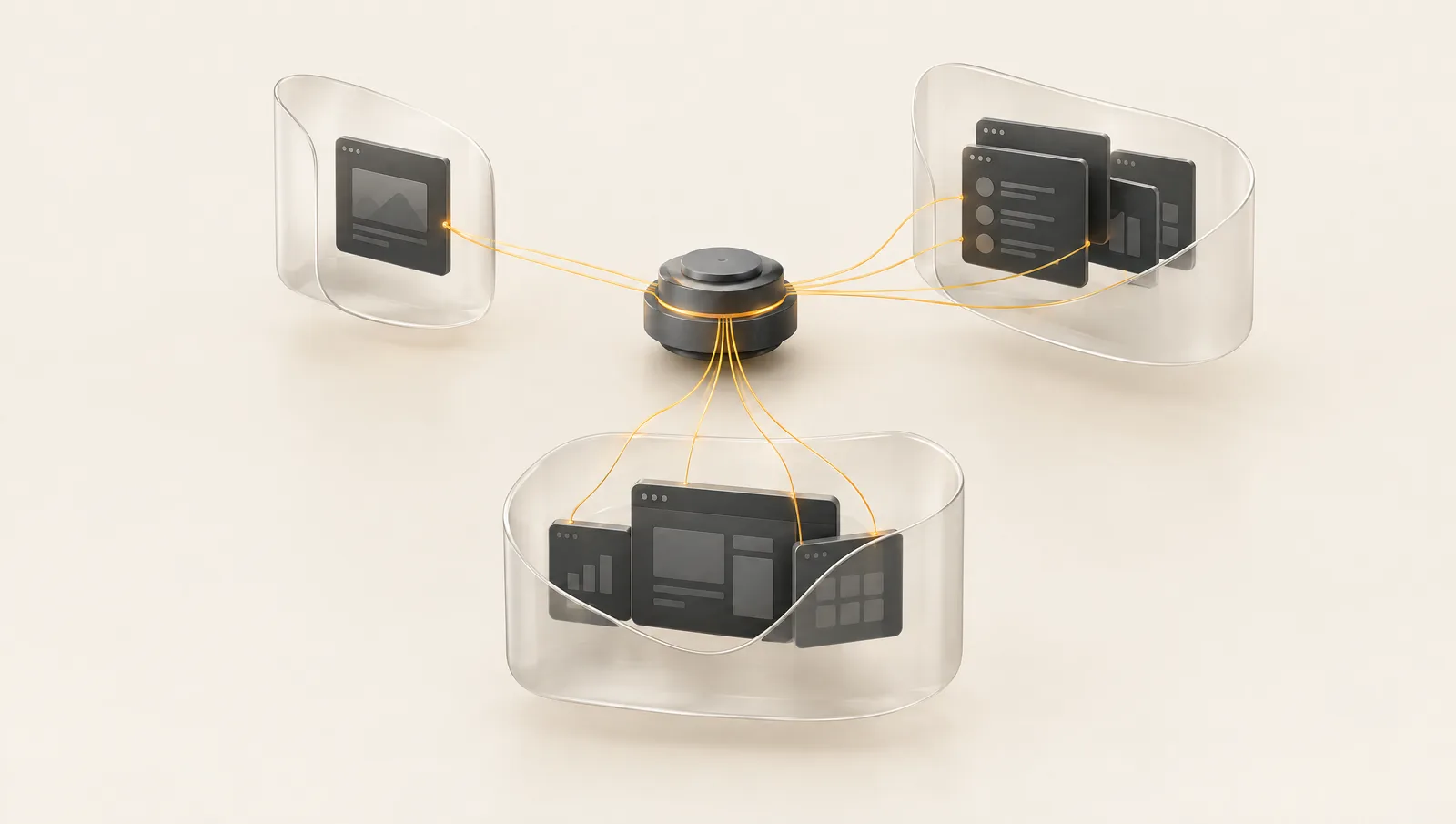
Nawame is presented as working memory separate from the assistants that use it. Context is therefore not tied exclusively to a conversation held by one model provider. That separation does not mean every connected tool should receive the entire memory.
Personal, shared and organizational context
Personal context supports an individual’s work: notes, drafts and preferences. Shared context comes from a decision to make information available within a particular scope. Organizational context also depends on roles, responsibilities and decisions that carry authority for the organization.
These distinctions prevent a common mistake. Information relevant to a team is not necessarily available to the whole organization. A private contribution does not automatically become shared material merely because it concerns the same project.
Nawame’s product pages describe the separation between private work and shared context. The Lab programme adds an evaluation requirement: access rights need to be checked when information is returned, including when a response combines material from several sources.
Assistants change, and so do permissions
Switching assistants should not require someone to rebuild an entire project history. It should not expand their permissions either. A newly connected tool needs the context the person is allowed to use, together with the sources and qualifications that make it meaningful.
Permissions also change during ordinary work. Someone may leave a team, a source may be withdrawn or a document corrected. Historical access is not permanent authorization. Memory needs to be evaluated under these changes, rather than only on a successful first read.
This is why the Lab includes departures, overlapping access scopes, revocation and deletion in its scenarios. A relevant answer obtained from a forbidden source would not count as success. Better response quality cannot compensate for a confidentiality failure.
Portability does not remove the boundary around third parties: scope and limits
When an authorized assistant receives context, the tool and its provider handle that information according to their own operation and rules. Hosting the memory in Europe does not, by itself, guarantee that every subsequent use will remain within the same boundary.
Nawame’s Sovereignty page makes that limit explicit. It also distinguishes encryption at rest from a promise that the operator cannot access information. Those are different guarantees. Connecting an assistant therefore calls for attention to the sensitivity of the context and the tools involved.
Export requires similar care. A readable format helps people take their work elsewhere, but it does not automatically reproduce the application’s access controls in every destination. The useful question is not simply whether information can leave. It is which context is being made available, to whom and for what purpose.
Read Who it’s for, enterprise AI memory and Sovereignty. For the information a portable context needs to preserve, see decisions and their reasons and sources, dates and disagreements.