Lab
Useful memory keeps the reasons behind a decision
Short answer
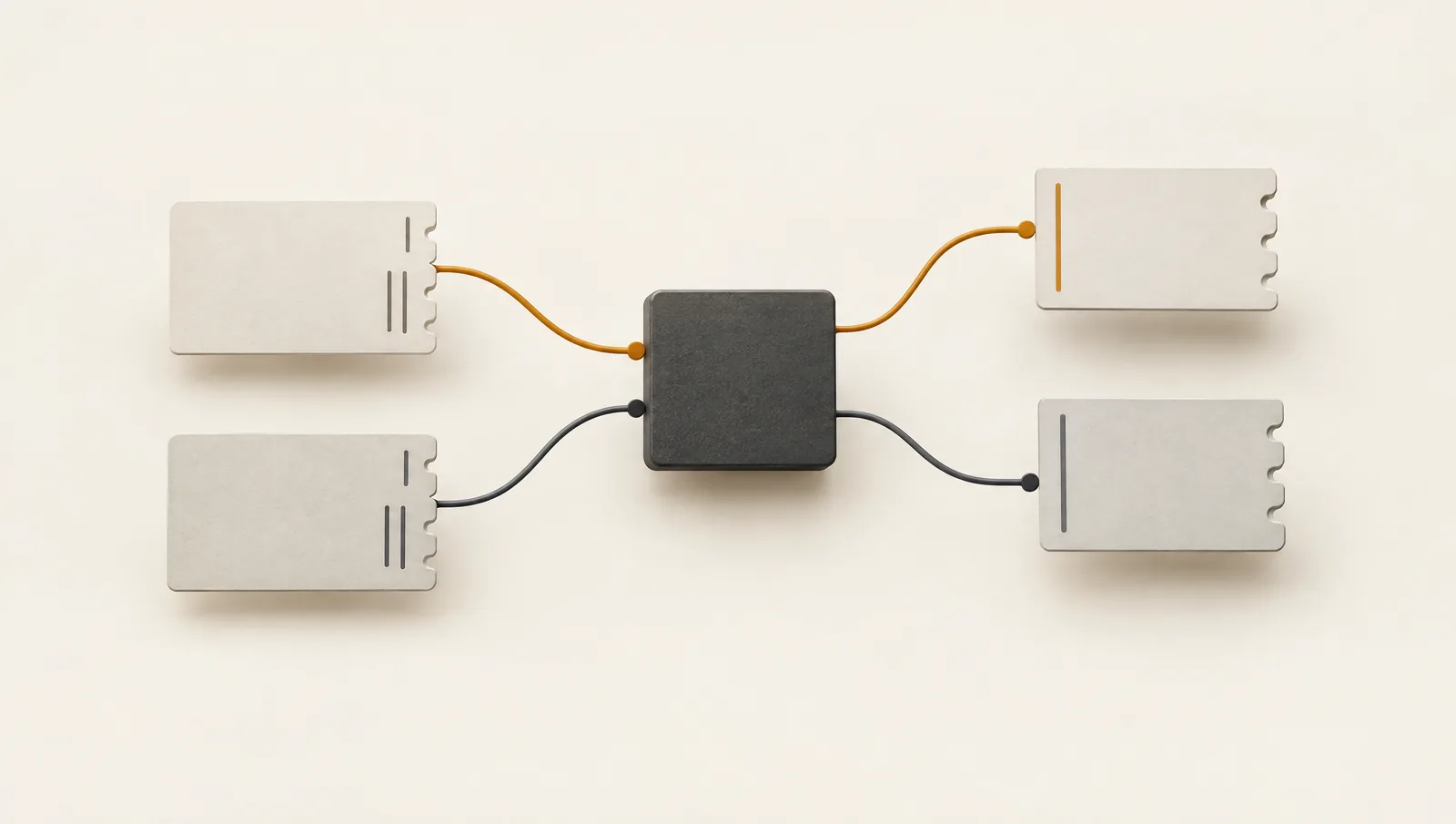
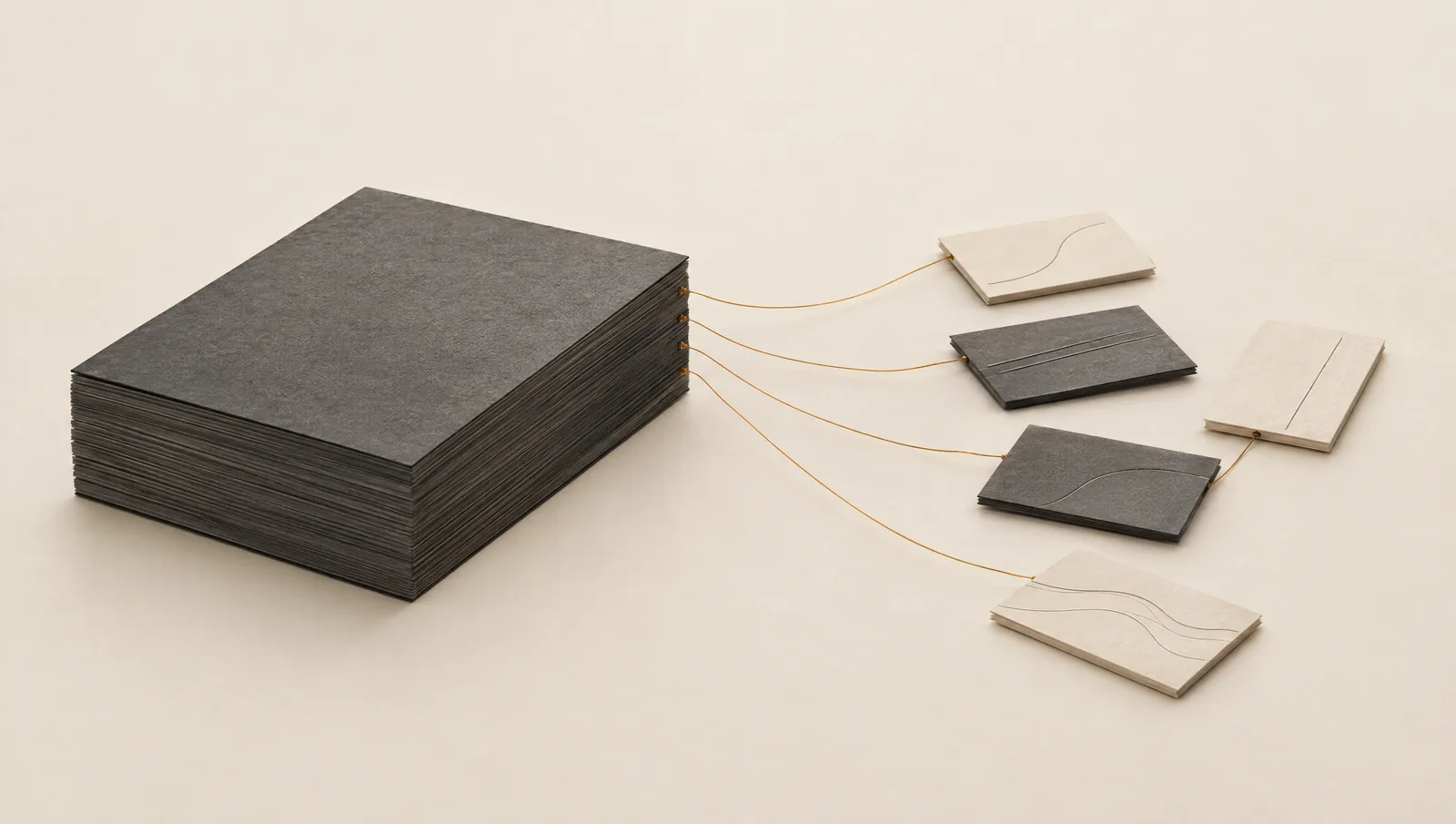
A decision without its context quickly becomes an unexplained rule. An assistant taking over ongoing work needs to know what was chosen, why it was chosen and which conditions still make that choice relevant.

A correct answer can miss the decision
Consider a fictional procurement example. A team selects a slightly more expensive supplier because it supports split deliveries. Months later, an assistant compares the catalogues and recommends the cheapest option. The price comparison may be accurate. The recommendation still overlooks the constraint that determined the original choice.
This illustrates the difference between data, history and working memory. A price describes something. A conversation history records an exchange. Useful memory makes the relevant decision and its supporting context available when work resumes. Keeping a complete transcript does not guarantee that its reasoning will reach the next assistant.
Nawame is intended to support that continuity: durable context that authorized assistants can consult as people move between tools.
Keep the reason, not a duplicate of everything
A decision note can be concise. In this example, it would identify the chosen supplier, the delivery constraint, the rejected alternative and the person who approved the choice. It would also state when the decision should be reconsidered, perhaps when split deliveries are no longer required.
Recording a rejected alternative prevents avoidable repetition. Without that detail, a new colleague or assistant may reopen an option that the team has already investigated. Rejection is not a permanent judgment about the supplier. It explains why that option did not fit the circumstances at the time.
Exceptions matter too. If the cheaper supplier remains available for emergency purchases, memory should preserve that limited permission. It should not turn a temporary exception into an organization-wide change. Scope is part of what a decision means.
What the Lab asks experiments to demonstrate: scope and limits
The Lab programme examines the retrieval of reasons for changes, revised values and effective dates. It also distinguishes proposals, approved decisions and observed outcomes. This prevents a suggestion made during exploration from gradually acquiring the status of an agreed policy.
The evaluation method compares approaches against the same stories and questions. A response is not adequate merely because it sounds reasonable. Its claims need support in the available sources, and it must respect the current reader’s access rights.
These are evaluation requirements, rather than a guarantee that every assistant will always recover every reason. Combining several sources and interpreting implicit relationships remain difficult tasks. They need separate measurement instead of being treated as solved by a good result on a simple question.
Use an old decision to ask a better question
Useful memory helps an assistant ask whether the original conditions still hold. Repeating “we chose this supplier” is insufficient if the delivery requirements have changed. The assistant can identify a reason to review the choice without pretending that a replacement decision has already been approved.
For users, this suggests a practical writing habit: preserve an explicit, checkable explanation rather than an emphatic conclusion with no traceable origin. The original record remains valuable when someone needs to inspect a qualification or challenge a summary.
For Nawame, the same approach preserves the product boundary. Memory stores and returns context; authorized people remain responsible for decisions. It does not require the service to systematically interpret private customer information using its own language model.
The aim is a more reliable handover, with enough context to continue and enough evidence to question what came before. It is not automatic agreement with the past. A well-recorded decision should be easier to revise when its reasons stop applying.
Read more about sources, dates and conflicting statements and portable memory with access boundaries. Who it’s for shows which kinds of work this durable context serves.
Related reading: Why preserve the reasoning behind a decision?.