Working with AI
What should AI remember from a meeting, project or decision?
Short answer
AI should remember what changes future action: decisions, reasons, constraints, commitments, open questions and things that need later verification. Exploratory discussion, temporary opinions and unrelated sensitive details should not automatically become durable memory.
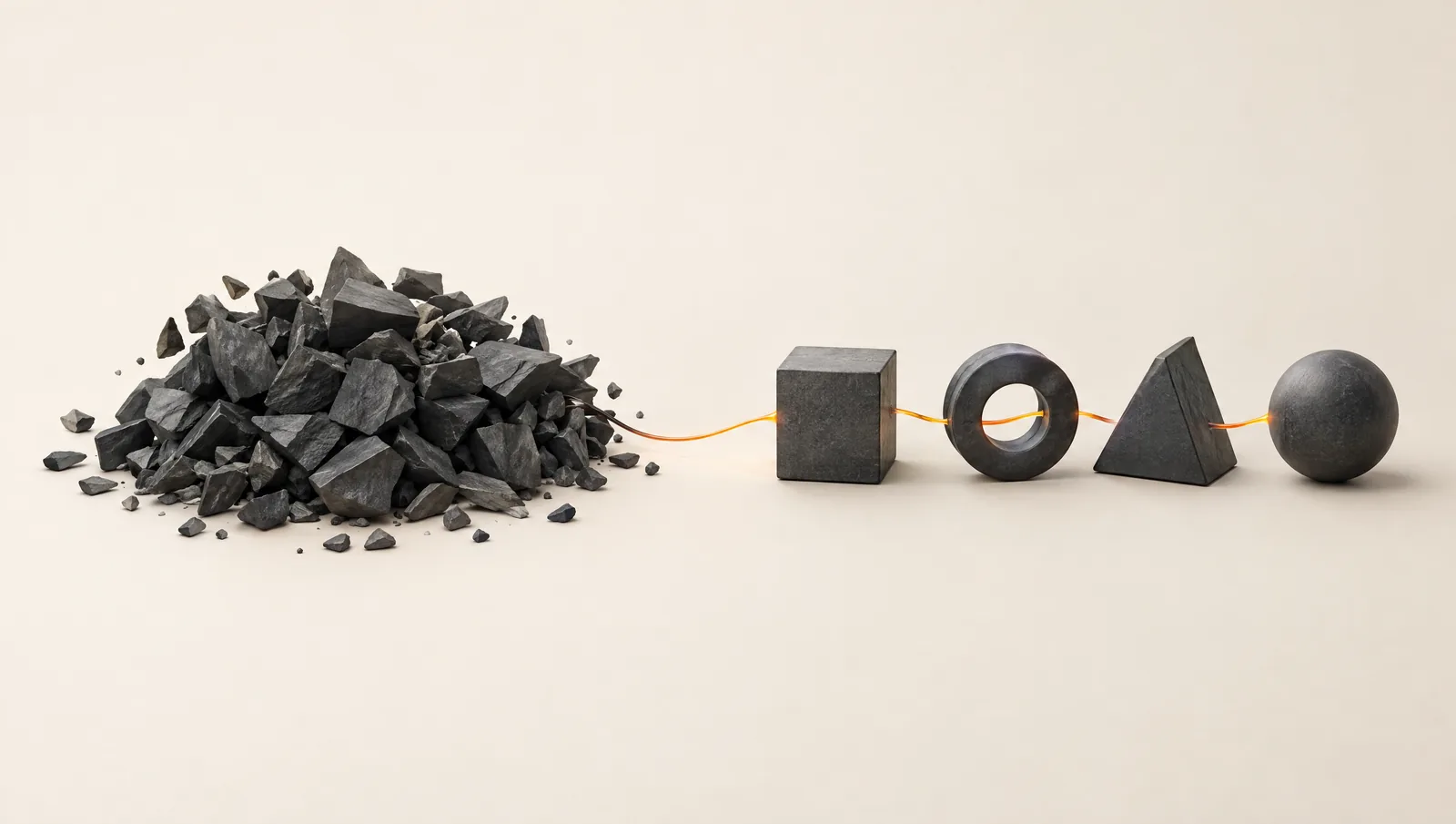
After a one-hour meeting, should AI memorize the full transcript? Technically, it can. That is rarely the best form of memory.
A transcript is a record. Useful memory is a selection of what will affect future decisions.
Remember decisions
The first layer is obvious: what was actually decided?
Good memory should include:
- the decision;
- the date;
- the scope;
- who validated it when that matters;
- any conditions.
Example:
The pilot starts with two teams on October 15. Expand to the rest of the organization only after four weeks of measurement.
That detail prevents a pilot from later being remembered as a full rollout.
Remember the reason
A decision without reasoning quickly becomes opaque.
Months later, someone may propose exactly the option that was already rejected. If memory preserves the reason, the team can decide whether that objection still applies.
The reasoning does not need to be an essay. One or two sentences are often enough.
Remember commitments
Meetings create promises:
- Marie sends the proposal on Friday;
- the security team checks compliance;
- the customer provides access;
- the pilot will be measured after four weeks.
Those commitments matter because they become open loops.
Memory that stores only final decisions loses much of the operational follow-up.
Remember open questions
Not everything is decided. It is important to preserve uncertainty explicitly.
Example:
Hypothesis: the slowdown may come from caching. Confirm before changing anything.
Without that status, the next AI may return with:
The slowdown comes from caching.
That silent promotion from hypothesis to fact is exactly what memory should avoid.
Remember what needs later verification
Some decisions are bets. Attach a review condition:
Keep this method for one month. If the error rate exceeds 2%, revisit it.
Memory can then connect the decision to its observed outcome.
What should usually not be remembered
Not everything said deserves to survive:
- jokes;
- awkward phrasing;
- brainstorming that went nowhere;
- personal information with no future value;
- unrelated sensitive details;
- repetition;
- abandoned hypotheses with no consequence.
Knowing when not to write is part of memory quality.
Should you keep the transcript?
Sometimes yes, as an archive or record with appropriate access controls. It does not need to become the active memory supplied to every AI request.
Keep the raw source separately when necessary, then expose a structured and editable summary to working memory.
A minimal post-meeting structure
You can use:
Decisions
- …
Reasons
- …
Commitments
- …
Open questions
- …
Hypotheses
- …
Review later
- …
Do not retain
- …
This simple structure is often more useful than a twenty-page transcript.
To keep the reasons, see why preserve the reasoning behind a decision. To decide what does not deserve to be written, read why a good memory must also know when not to write. To give each item a status, the difference between a memory, a fact, a decision, a hypothesis and an instruction provides the categories, and how to keep AI project context for months shows upkeep over time. The documentation describes what Nawame keeps.
Limits of this method
Selection remains a human judgment: an implicit decision can slip out of the summary, and what looks harmless today may matter in six months. Recording a meeting also means informing participants and following your organization’s rules. This article describes a practice, not a transcription feature.