Comparisons
RAG, vector database or AI memory: which one do you need?
Short answer
Use a vector database when you need semantic similarity search, RAG when you want answers grounded in an existing corpus, and AI memory when context needs to evolve over time. Advanced systems often combine all three.
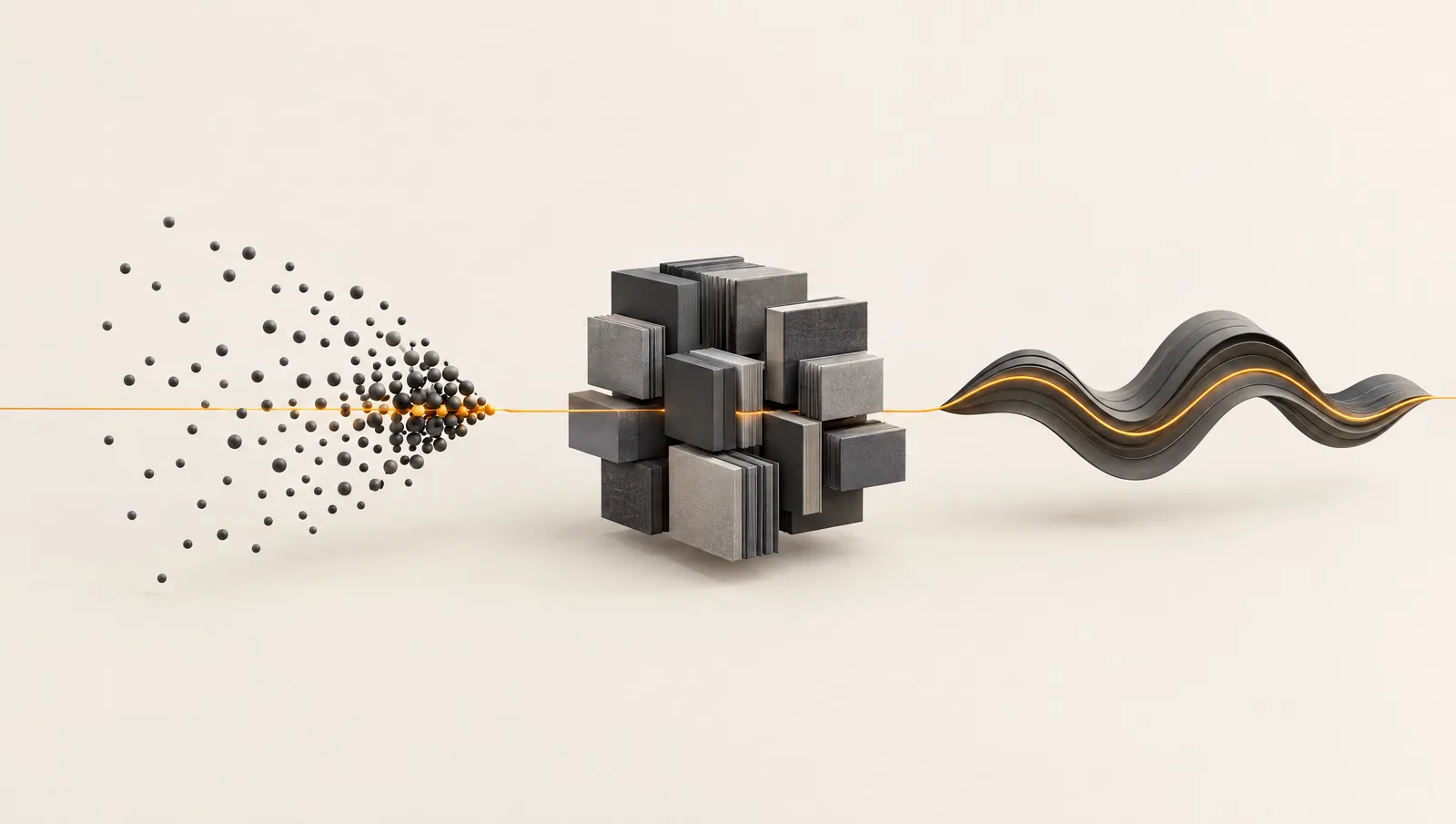
“RAG”, “vector database” and “AI memory” are often discussed as competing products. They are better understood as different layers of a context system.
The useful question is not “Which is best?” It is “What problem are you solving?”
You need a vector database when…
Your primary need is similarity search rather than exact keyword matching.
Examples:
- finding semantically similar passages;
- searching documents by meaning;
- indexing vector representations;
- supporting recommendation or retrieval systems.
A vector database does not decide what deserves to become memory. By itself, it does not manage whether a fact is obsolete or whether two projects must remain isolated.
You need RAG when…
Your AI needs to answer from an existing corpus:
- internal documentation;
- knowledge bases;
- client files;
- procedures;
- product catalogues;
- web pages;
- contracts.
RAG supplies the model with passages relevant to the question. Quality depends on chunking, indexing, retrieval, reranking and how the sources are presented to the model.
You need AI memory when…
Your problem is continuity:
- user preferences;
- project history;
- decisions;
- changes;
- corrections;
- observed outcomes;
- active rules;
- open questions.
Memory must evolve with the subject. It is not simply a corpus that happens to be searchable.
A simple decision framework
Ask three questions:
Does the information already exist in documents?
If yes, RAG is likely relevant.
Do you need semantic similarity to retrieve it?
If yes, a vector layer may help.
Does the information change over time and stay attached to a person, project or organization?
If yes, you probably need a memory model.
Example: a product team
Technical documentation belongs in a RAG corpus.
Searching for similar incidents may use a vector database.
The statement “we disabled this feature because it created a data leak, revisit after fix X” belongs more naturally in project memory.
All three layers can work together.
The underlying difference is laid out in AI memory vs RAG, and the distinction from context in AI memory vs context. The limits of a vector-only system are detailed in limits of retrieval at scale and when semantic search invents a false precedent. To decide what you inject with each request, see giant prompt or targeted context. If your need is organizational, how to build company memory that AI can actually use extends this guide, and the Lab publishes our studies.
Why an all-vector approach often hits limits
If everything is turned into embeddings and ranked by similarity, two questions remain unanswered:
- Does similarity tell you whether the information is still true?
- Does similarity tell you who is allowed to see it?
Those dimensions matter in long-lived systems.
Start with the problem, not the technology
If you are a small team with twenty pages of documentation, a complex RAG stack may be unnecessary.
If your only problem is remembering decisions inside a project, a simple structured memory may be enough.
If you are building a product with millions of documents and thousands of users, you will need a more sophisticated architecture.
The right system is the one that introduces the least complexity for the continuity you actually need.
Limits of this decision guide
This guide simplifies: a real project often mixes several needs, and the boundaries between these building blocks shift from one product to another. It does not replace a test on your own data or a security assessment.